Wild animals do not read property lines. When drought thins natural food, when a structure offers the perfect attic cavity, or when birdseed piles up under a feeder, wildlife follows opportunity. The result can be scratched ducts, chewed wiring, contaminated insulation, or a skunk that made your crawlspace smell like a tire fire. Dealing with it effectively takes more than a trap and a wish. It calls for a blend of biology, building science, and ethics. That blend is the heart of humane pest wildlife removal.
This guide traces what actually works on the ground: how to read the signs, select the right timing, use one‑way devices, and seal buildings so you do not repeat a costly cycle. I will also unpack common misconceptions that lead to dead ends and share what to expect from professional wildlife removal services. Throughout, the goal is practical: keep people and pets safe, keep structures intact, and keep animals alive whenever possible.
What humane pest wildlife removal really means
Humane does not mean hands‑off. It means using methods that minimize stress, injury, and separation of parents from dependent young. In nuisance wildlife management, success means more than getting the raccoon out of the attic. It means ensuring she does not return, and that her kits are not left to starve inside a soffit.
Humane methods focus on these core principles:
- Identify the species and life stage, then plan accordingly. Removing a nursing mother in May without locating the den is a preventable disaster. Prefer exclusion over trapping. Give animals a clear exit and remove incentives to reenter, rather than playing whack‑a‑mole with traps. Time work to biology. Breeding seasons vary by region and species. A good plan respects those windows.
That approach pays off. Properties stay quiet, repair costs drop, and you avoid the moral and legal hazards that follow harm to wildlife.
First, know who you are dealing with
Good wildlife control starts with detective work. Most animals leave a calling card, and you can learn the basics from a few minutes with a flashlight and a notebook.
Squirrels usually enter along rooflines: gaps at the fascia, missing soffit vents, or a chewed corner at a dormer. They are daytime noisemakers. Expect scurrying and rolling sounds in early morning and late afternoon. Look for acorn shells and short, pellet‑like droppings near entry points.
Raccoons are heavier and less subtle. They can peel back shingles or push through a weak roof vent. They prefer attics and chimneys. Nighttime thumps and chittering are common. A classic sign is a smudged grease mark around a hole, sometimes with muddy paw prints on downspouts. In spring, listen for high‑pitched trills from kits.
Bats slip through gaps smaller than a thumb, often along ridge vents, gable ends, or where a chimney meets siding. They are noiseless outside of dusk and dawn departures. Brown stains from guano dusting and urine drip lines below a gap are common. Never block bat exits without a one‑way device, and only outside maternity season.
Skunks like ground‑level voids: half‑open crawlspace vents, gaps under steps, or eroded areas under slabs. Digging at night, a cone‑shaped hole, and a sudden odor tell the story. Skunks also den under sheds that lack rat walls or apron barriers.
Opossums will take any opening that is easy. They are less destructive than raccoons but still spread fleas and ticks. Their droppings are larger and twisty, often in randomly scattered spots.
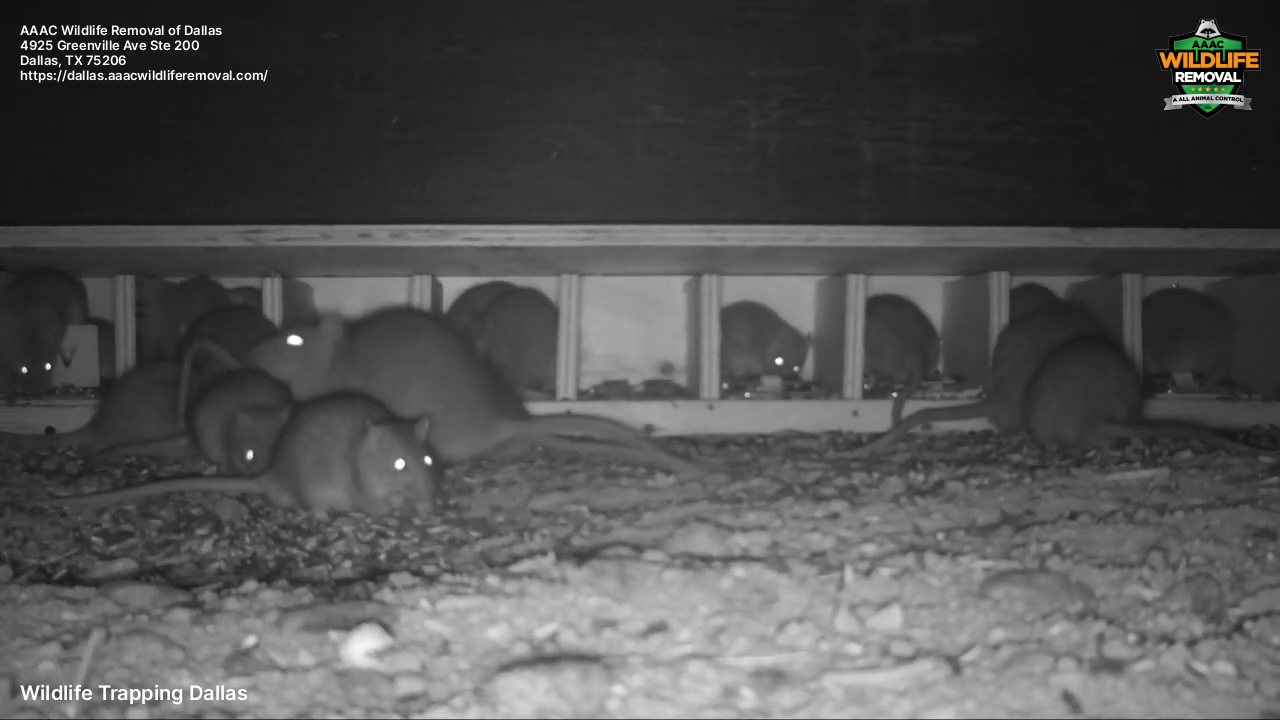
Rodents such as rats and mice need only a pencil‑sized gap. Gnaw marks on baseboards or garage weatherstrips, rub marks along runways, and rice‑grain droppings point to a rodent problem that crosses from wildlife into traditional pest control.
Birds, from starlings to woodpeckers, cause two patterns: nesting inside vents and damage to siding. Dryer and bathroom fan vents become condos when the damper breaks. A woodpecker may drum or excavate holes that track insect activity in the siding.
If you are unsure, set a trail camera for two or three nights. Position it at suspected entry points or along fence lines. A $50 camera can save hundreds by preventing the wrong plan.
Health and safety, without drama
Wildlife near people raises health questions. Approach them with facts, not fear.
Rabies risk concentrates in a few species and varies regionally. Bats, raccoons, skunks, and foxes are reservoirs in North America. The rule is straightforward: any direct contact with a bat, especially if a person was sleeping or a child is involved, warrants an immediate call to local health authorities. Do not release a bat found in a bedroom until you have their guidance. For other wildlife, unusual behavior such as midday staggering, vocalizing without prompting, or extreme aggression is a red flag.
Histoplasma, often associated with bat and bird droppings, is a respiratory hazard when spores aerosolize. Disturb dense guano only with proper PPE and containment. For attic cleanouts with raccoon latrines, baylisascaris (raccoon roundworm) changes the safety protocol. Heat treatment, careful removal of contaminated insulation, and targeted disinfection are essential. That is one of the clear cases where professional wildlife removal services offer more than convenience.
Electrical damage is a quiet hazard. Squirrels and rats chew wiring, and arcing inside an attic does not announce itself until it matters most. After any rodent or squirrel eviction, budget for an electrician to inspect exposed runs, junctions, and panel feeds. The cost is minor compared to the stakes.
Timing is everything
The best wildlife control respects life stages. The calendar matters more than the gear.
Squirrels typically have two breeding peaks, late winter and late summer. In many areas, February through May and again August through October produce dependent young. If you seal an https://reidewqg387.fotosdefrases.com/pest-control-vs-wildlife-control-what-s-the-difference adult out during these windows without locating juveniles, expect odor, flies, and a frantic mother tearing new holes to return.
Raccoons usually have one litter between March and June. Kits stay den‑bound for six to ten weeks. If you discover kits in the attic, a common technique is to gather them in a warming box near the exit and install a one‑way door. The mother will relocate them over the next night or two to an alternate den.
Bats form maternity colonies from late spring through mid to late summer. Exclusion must wait until juveniles can fly. Many states set legal blackout periods for bat exclusion, typically from late May through August. Work outside that window whenever possible.
Skunks and opossums will carry young in late spring, but they move dens more readily. You still need to confirm that a mother can reach her young after installing a one‑way device, which may require temporarily creating a short‑term return path.
When a call comes in midwinter with faint attic noises, do not assume rodents. In colder regions, flying squirrels form communal winter colonies and are most active at night. The plan changes with the species.
The humane toolbox
People often picture cages and bait. In practice, the backbone of humane wildlife pest control looks different: one‑way doors, proper sealing, and habitat adjustments.
One‑way doors, also called exclusion devices, allow wildlife to exit but not reenter. They require precise placement at active entry points, with all secondary gaps sealed. For raccoons or larger squirrels, heavy‑gauge wire devices mounted over the hole, with a swing gate that opens out, work well. For bats, narrow mesh tubes or netting systems create an easy slide out at dusk. For skunks, a ground‑level exclusion device mounted over a burrow entrance is paired with trenching and hardware cloth to prevent digging around it.
Sealing, often called wildlife exclusion services, is where most DIY efforts fall short. Animals explore edges and corners, not just the most obvious hole. A thorough exclusion seals primary and secondary points: roofline gaps, eave returns, gable vents, ridge vent ends, chimney crowns, soffit intersections, utility penetrations, crawlspace vents, and the garage door bottom seal. Materials matter. Aluminum flashing, heavy‑duty hardware cloth, stainless fasteners, and pest‑grade sealants outlast foam and flimsy vent covers. Foam has its place as a backer for sealants, not as a standalone barrier.
Habitat changes tilt the odds. If you feed birds, expect squirrels and raccoons. If you store pet food in the garage, expect rodents. Trim branches back at least 6 to 8 feet from the roofline so squirrels cannot simply leap to the eaves. Install chimney caps that are properly framed and anchored, not just friction‑fit spark arrestors. For decks and sheds, install a dig‑proof skirt: 16‑gauge hardware cloth or welded wire, attached to framing and buried as an L‑shaped apron 12 to 18 inches deep and 12 inches out.
Trapping has a narrow role. In many regions, relocation is illegal or cruel, as relocated animals struggle to find food and often die. Live trapping can be useful for a problem individual when exclusion cannot begin immediately or when a trap‑savvy raccoon has learned to defeat devices. Lethal control is sometimes justified with rodents or invasive species, but it should be targeted and compliant with local laws. A responsible wildlife trapper treats trapping as a last resort, not a default.
Repellents earn mixed reviews. Mothballs are illegal for this use and dangerous. Predator urine, strong odors, and ultrasonic devices may shift behavior for a day or two. Used alone, they do not solve structural access or food sources. I have seen them buy time during a storm when you cannot climb a roof, but they are not a plan.
Step‑by‑step flow that actually works
- Inspect inside and out. Identify species, entry points, and signs of dependent young. Photograph everything. If young are present or suspected, plan for reunion. Stage a warming box or migration path, and time the exclusion to an evening when the mother is active. Seal secondary gaps first. Leave the main entry open and fit a one‑way device at that point. Monitor for 72 hours. Use a trail camera or flour tracking at the exit. Once activity stops, remove the device and permanently seal the last hole. Clean up and repair. Remove contaminated insulation if needed, disinfect heavy-use latrines, and schedule electrical checks. Address food sources and access routes outside.
That sequence avoids the common trap of sealing a building like a drum, only to learn you locked trouble inside.
Regional realities and legal guardrails
Wildlife regulations differ by state and province. Many areas require licenses for wildlife control operators, set seasons for bat exclusion, and prohibit relocation beyond a certain distance. Some species are protected. For example, most native birds and their nests are protected by federal law in the United States, with narrow exceptions. Canada and the EU have their own frameworks that protect bats broadly.
Before starting, check your local department of natural resources or equivalent. Good wildlife removal services handle permitting, documentation, and any required releases. Ask how they comply with maternity season restrictions and what they do if they discover dependent young mid‑job. The answer tells you who you are dealing with.
Homeowner associations and historic districts add layers. Historic homes often have fragile soffits and hidden voids. A sledgehammer approach can do more harm than a family of squirrels ever could. That is where a technician who understands both building envelopes and animal behavior pays for themselves.
The cost picture, with real numbers
Budgets vary by species, building, and region, but some ranges hold up across North America.
A typical single‑entry squirrel eviction with sealing around a small 1,800 square‑foot home may run $350 to $900 for labor and materials. If you add replacement of chewed soffit, a ridge vent guard system, and attic remediation, the bill can reach $1,500 to $3,000.
Raccoon exclusion tends to cost more because of structural damage and cleanup. Expect $600 to $1,500 for eviction and sealing on a straightforward job, and $2,000 to $5,000 when insulation replacement or guano‑level cleanup is involved.
Bat work spans the widest range. Multiple entry points high on a steep roof, long ridge vents, and a large colony drive costs. A small home with a single gable gap might be $800 to $1,200. A complex roofline with full‑perimeter vent protection and a maternity colony easily reaches $2,500 to $6,000. Many companies offer warranties ranging from one to five years; read the fine print about maintenance and new damage.
Skunks and ground exclusions are labor heavy because of trenching and wire skirt installation. A shed exclusion can be $300 to $800. Full deck perimeters and crawlspace fortification push into the $1,000 to $2,500 range.
Rodent control differs because it often blends pest control with wildlife control. Monthly service plans that include exterior bait stations run $30 to $80 per station per month. Better results come when the plan prioritizes sealing and sanitation, not just bait.
Cheapest is rarely best. I have repaired too many “excluded” homes where someone used foam alone or left gable vents unprotected. Saving $200 on day one cost the homeowner triple six months later.
When to call a professional, and what to ask
Some situations call for help. If you suspect bats, if you found a raccoon latrine, if your roof pitch makes access dangerous, or if you are navigating a maternity season, bring in wildlife removal services. They bring ladders, PPE, insurance, and a practiced eye that shortcuts guesswork.
When you interview a provider, skip the sales pitch and ask for details:
- What species do you think this is, and why? A clear answer that references signs on your property beats generic claims. Will you use one‑way devices or traps? Under what conditions do you trap? How will you handle young if present? Ask for the exact steps. What materials will you install, and where? Request a sketch or photos of expected seal points. What is your warranty, and what voids it? Weather, new damage by other animals, and roof replacements can affect coverage.
A responsible wildlife trapper or exclusion specialist answers without hedging. They should be comfortable postponing work to respect a bat maternity window or to locate kits before sealing. If they push poison for squirrels or promise to relocate wildlife to a “sanctuary,” be cautious. Most such claims collapse under scrutiny or local law.
Case notes from the field
A ridge vent that whistled in crosswinds turned into a squirrel expressway on a 1990s two‑story colonel in late September. The homeowner had patched a soffit gap with spray foam, which the squirrels viewed as a snack. We installed metal ridge vent guards along 48 feet of roofline, sealed a dormer flashing gap with aluminum and sealant, and fit a one‑way device at the active hole. Inside, we found two golf‑ball‑sized gnaw marks on Romex near a junction. An electrician replaced the run. Total time on site: 6 hours over two days. Total cost: $1,750, including materials. Three winters later, still quiet.
Another job involved bats in a 1920s Tudor with slate shingles. The colony used a half‑inch gap at the chimney saddle and several thumb‑sized holes at decorative half‑timbers. It was June, so we postponed full exclusion until late August. We pre‑sealed obvious non‑exit gaps to reduce airflow cues, then returned to install one‑way bat valves at the active points for seven nights. Once activity dropped to zero on the cameras, we sealed every gap with mortar‑tinted sealant and copper mesh. The homeowner appreciated the schedule transparency as much as the result.
Skunks under a deck are usually straightforward. This one was not. A sprinkler line emerged exactly where we planned to trench. We adjusted the skirt, adding a deeper vertical drop and extending the horizontal apron to 18 inches with overlaps. We mounted a one‑way door at the known entrance and camera‑confirmed the departure. A wildlife‑friendly low‑profile floor vent cap in the adjacent crawlspace prevented a repeat through the vent. Problem solved without a single trap.
Avoiding the rebound cycle
Many households evict wildlife and then repeat the pattern the next season. Breaking the cycle takes discipline more than dollars.
Keep seed off the ground. Use catch trays and clean them weekly. Store seed in metal containers with tight‑fitting lids. Switch to seed blends less attractive to squirrels or install baffled feeders on smooth poles at least 10 feet from any jumping point.
Seal garbage. Raccoons can open light latches. Use bins with locking lids and keep them in the garage until pickup day where possible.
Maintain the building envelope. Replace rotted trim, re‑caulk utility penetrations, and check roof vents after storms. A spring and fall ladder check of the roofline pays dividends.
Install and maintain chimney caps. A $200 cap beats a $1,200 raccoon eviction and cleanup every time.
Mind the crawlspace. Close vents with rodent‑proof screens, fix torn vapor barriers, and repair access doors so they close flush. Avoid leaving pet food in bowls outside overnight.
These habits, coupled with structural exclusion, deliver the only sustainable outcome: animals live where they should, and your home stays quiet.
Working alongside traditional pest control
Wildlife exclusion intersects with pest control in practical ways. A pest control company might manage rodent populations around a commercial building with exterior bait stations, while a wildlife control team hardens the structure to deny entry. The sequencing matters. Sealing first without addressing a heavy rat population outside can push gnawing pressure up, leading to chewed door sweeps and corners. Conversely, baiting without sealing creates a thousand‑dollar subscription to an avoidable problem.
Ask providers of pest control and wildlife pest control to coordinate. A shared map of entry points, conducive conditions, and sanitation adjustments prevents overlap and gaps. Clear responsibility saves time: pest control handles sanitation and population pressure, wildlife control handles exclusion. Many firms now offer both under one roof, which can be convenient if they truly prioritize sealing and habitat corrections over endless treatments.
Ethics, neighbors, and the long view
Wildlife moves on a neighborhood scale. If you seal your home while your neighbor’s deck remains a revolving door, animals will test your work. Good communication helps. Offer to share the name of the wildlife removal services you used. A block that installs chimney caps after one chimney raccoon incident is a block that avoids three more.
Children learn from what they see. When a family watches a raccoon mother move her kits through a one‑way exit to a new den tree, it teaches a quiet lesson about coexistence and boundaries. Humane wildlife control is not sentimental. It is a pragmatic ethic that recognizes animals as part of the environment we share, and homes as spaces that deserve protection without unnecessary harm.
A short checklist for getting started
- Confirm the species and life stage before acting, using signs and, if needed, a trail camera. Plan for exclusion, not just removal. Identify every likely entry point, not only the obvious one. Time the work to avoid trapping juveniles inside. Respect bat maternity windows. Use proper materials: hardware cloth, metal flashing, sealant, and chimney caps. Clean up attractants and fix vulnerabilities so you do not invite a sequel.
Final thoughts grounded in practice
Humane pest wildlife removal is not a niche ideal. It is the most reliable way to resolve conflicts between buildings and animals. It blends hard boundaries with soft hands. You give the raccoon the message: you cannot live in the attic. You also give her the means to leave safely and a reason not to return. Then you make the building say the same thing tomorrow, next season, and five years from now.
Whether you hire a wildlife trapper or handle smaller tasks yourself, anchor your plan in identification, timing, and exclusion. Use wildlife exclusion services for the parts that demand ladders, licensing, or specialized cleanup. Coordinate with pest control when rodents blur the line between wildlife and household pests. If you work with the animal’s biology and your building’s physics, you will spend less, sleep better, and keep the story from repeating.